Fiberglass Sleeving vs Heat Shrink Tubing: Two Ways to Protect a Wire
Material vs Material · 2026-07-18
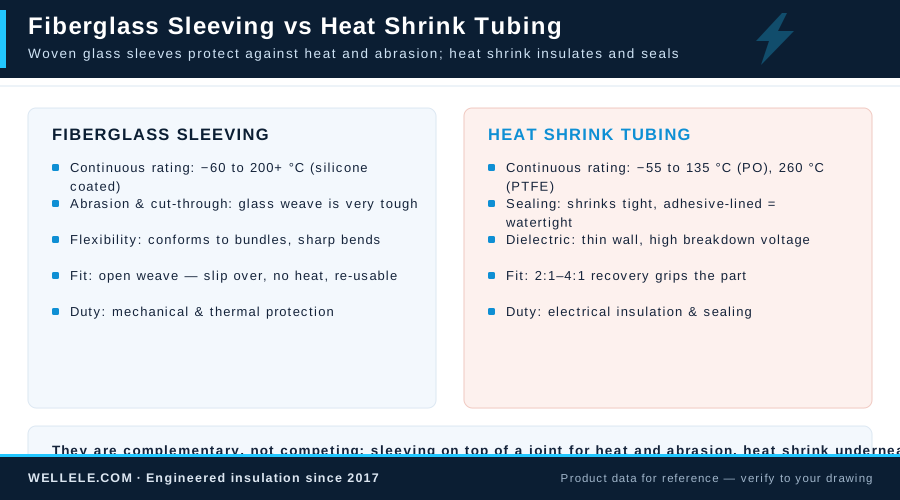
When a wire needs protection, two product families cover most of the work, and they are not substitutes for each other. Fiberglass sleeving is a braided, open-weave armor that slips over a wire and stays removable. Heat-shrink tubing is a conformal layer that shrinks onto the wire and becomes part of the assembly. The right choice depends on what the wire actually faces.
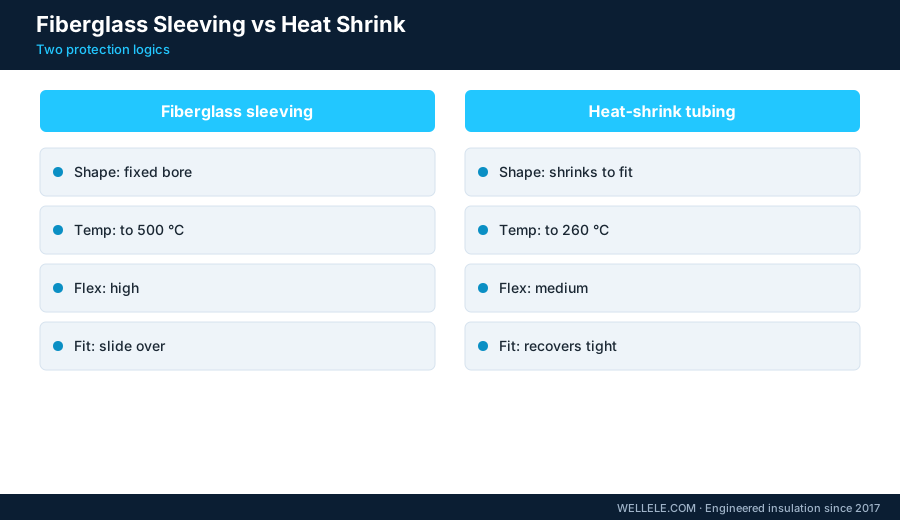
What each one is made for
| Factor | Fiberglass sleeving | Heat-shrink tubing |
|---|---|---|
| Installation | Slip on, no heat | Heat gun required |
| Temperature | 200 degC+ continuous; silicone-coated grades higher | Material dependent, 105-260 degC |
| Abrasion | Excellent, braided structure | Moderate |
| Sealing | None, open weave | Good; waterproof with adhesive lining |
| Electrical insulation | Secondary, depends on coating | Primary insulation function |
| Removable / reworkable | Yes | No, must be cut off |
| Relative cost | Low to medium | Medium |
When to pick fiberglass sleeving
- High heat: motor leads, ovens, exhaust-adjacent wiring, transformers
- Abrasion zones where a braided armor outlasts a film tube
- Sites where heating is not practical or not allowed
- Harnesses that must be opened for service, sleeving slides off and back on
The silicone-coated grades add a sealed outer skin to the braid, which lifts both temperature and fluid resistance. Our range covers silicone-coated sleeving, silicone-resin sleeving and fire sleeve for the hottest duties.
When to pick heat shrink
Heat-shrink is the right call when the job is electrical insulation and sealing rather than armor: the tubing conforms to the joint, keeps moisture out (adhesive-lined grades pass submersion tests), and adds dielectric strength. It is the standard for splices, terminals, and every place a wire ends. On wires that flex, a correctly sized heat-shrink tube also works as a strain-relief transition at the connector.
Combining both
On demanding harnesses the two are often used together: a heat-shrink splice inside, then a fiberglass sleeve over the whole branch for abrasion and heat. The combination costs less than a specialist high-temperature heat-shrink on every joint and is easier to service.
For the sealing side of the comparison, our dual-wall adhesive-lined tubing guide explains when the waterproof inner wall is worth the extra cost.
Specifying this part?
Send the drawing for a manufacturability review.