Fluoropolymer Heat Shrink Temperature: PTFE vs FEP vs PFA Guide
Engineer's Guide · 2026-08-23 · 9 min read
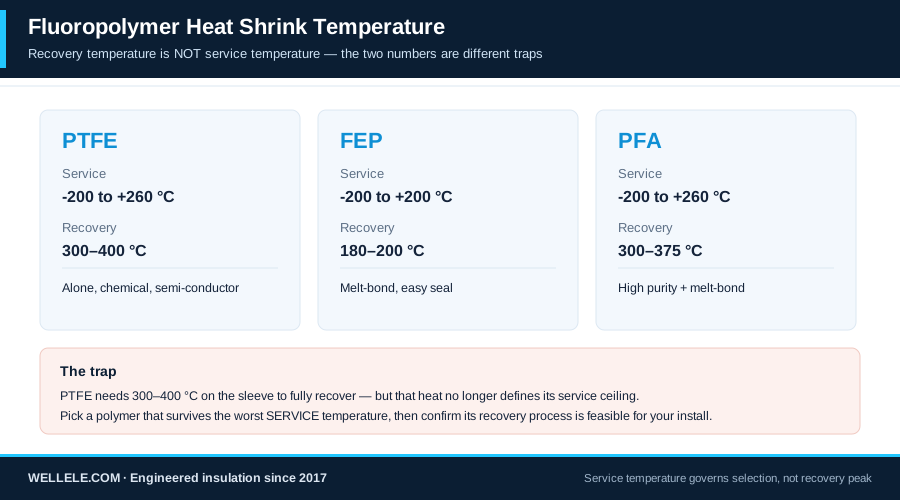
PTFE, FEP and PFA are the three fluoropolymer heat shrink materials, and temperature is where they split. All three resist heat and chemicals well, but their service ceilings and recovery temperatures differ enough to decide a spec. This guide lays out the numbers and maps each material to the jobs it fits.
The temperature numbers
| Property | PTFE (Teflon) | FEP | PFA |
|---|---|---|---|
| Recovery temperature | 300–400 °C | 180–200 °C | 300–375 °C |
| Service temperature | -200 °C to +260 °C | -200 °C to +200 °C | -200 °C to +260 °C |
| Typical peak (short-term) | ~300 °C | ~220 °C | ~300 °C |
| Dielectric strength | ≥ 25 kV/mm | ≥ 25 kV/mm | ≥ 25 kV/mm |
| Flame retardancy | UL 94 V-0 | UL 94 V-0 | UL 94 V-0 |
| Distinctive temperature trait | Widest window; recovery needs 300 °C+ equipment | Lowest recovery temperature | PTFE-class service with melt-processability |
The split is clear. PTFE and PFA share the -200 to +260 °C service band and PTFE-class recovery; FEP drops to 200 °C service and recovers at a much lower temperature. Recovery is an installation step, not a service rating. What matters in service is the continuous temperature the tube sees day to day.
Recovery temperature is an installation parameter
PTFE needs 300 to 400 °C to recover, which means proper recovery equipment on the line. FEP recovers at 180 to 200 °C, low enough for a standard polyolefin-rated heat gun. PFA recovers at 300 to 375 °C. If your line only has a heat gun, FEP is the practical choice; if you need PTFE-class service with a melt-bondable material, PFA is the bridge.
Mapping material to application
| Your application | Service temp | Recommended material |
|---|---|---|
| Cryogenic / aerospace wire, chemical exposure | -200 °C to +260 °C | PTFE (or PFA if melt-bonding needed) |
| Lab / industrial, standard heat-gun install | ≤ +200 °C | FEP (lowest recovery temp) |
| Semiconductor / chemical processing, welded joints | ≤ +260 °C | PFA |
| Continuous service above +260 °C | , | None, not a fluoropolymer heat shrink job |
Why FEP exists alongside PTFE
FEP trades some service ceiling for a low recovery temperature and easier installation. On lab and industrial jobs at 200 °C or below, that is a fair trade: standard tools, no high-heat oven. Above that, PTFE or PFA take over.
Continuous service above 260 °C
Nothing in the fluoropolymer heat shrink family is rated for continuous service above 260 °C. If the part runs hotter than that, the answer is a different material class, not a higher ratio of the same one.
Common questions
Which fluoropolymer handles the highest temperature?
PTFE and PFA, both rated -200 to +260 °C continuous, with PTFE peaking around 300 °C short-term. FEP tops out at 200 °C service. Recovery is separate: PTFE and PFA need 300 °C-plus equipment; FEP recovers under a heat gun.
Can I install PTFE with a standard heat gun?
Not reliably. PTFE recovers at 300 to 400 °C, beyond a polyolefin-rated heat gun. You need an oven or hot-air tool rated for that range. If your line only has a heat gun, specify FEP.
Why would I pick FEP over PTFE?
When service stays at or below 200 °C, FEP recovers at 180 to 200 °C with standard tools and is simpler to install. You give up the higher ceiling but gain an easier line.
Is PFA just high-temperature FEP?
No. PFA matches PTFE's service class (260 °C) and adds melt-bondability, so it welds into leak-free assemblies. FEP is a lower-temperature material with an easy recovery.
What about continuous duty above 260 °C?
None of these qualify. Above 260 °C continuous, move outside the fluoropolymer heat shrink family to a higher-rated material.
Which one does semiconductor equipment use?
PFA. It matches PTFE's temperature class, is melt-bondable, and has the high-purity profile the process needs.
Where do I get them?
WELLELE supplies PTFE, FEP and PFA heat shrink in recovered ID, wall and conditioning per drawing. Request a quote.
Specifying this part?
Send the drawing for a manufacturability review.