Silicone Fiberglass Sleeving Temperature: 180°C to 260°C Guide
Engineer's Guide · 2026-08-23 · 8 min read
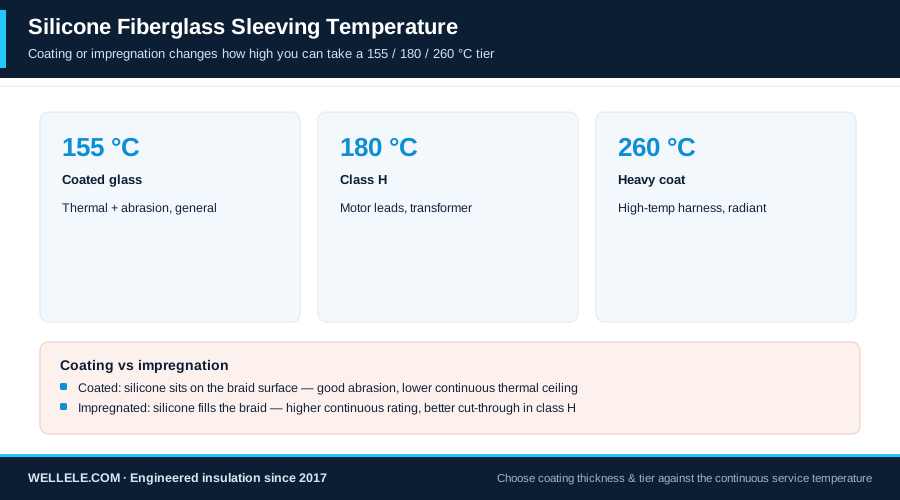
The term "high temperature" in cable protection is broad, but the rating is a precise specification that separates a reliable harness from a thermal failure. Standard silicone-coated or resin-impregnated glass sleeves operate where polyolefin melts, covering the 180 °C to 260 °C continuous window. However, picking the wrong grade based on the "silicone" label alone often leads to premature cracking or coating degradation. This guide breaks down the rating landscape across different coating processes, when to specify the 260 °C heavy-duty grade, and how to verify thermal life. For the full product range, visit our flexible and heat-shrink sleeving section.
Three grades of silicone fiberglass sleeving temperature
The rating starts with the coating and how it is applied:
- Silicone Resin Impregnated (180 °C): A thin layer of silicone resin is impregnated into the glass braid. It offers high flexibility and a smooth inner wall for easy wire insertion. Rated for continuous service at 180 °C.
- Silicone Rubber Coated (200 °C): A thicker layer of silicone rubber is extruded or coated over the braid. This is the standard "silicone sleeve" found in most industrial heaters and appliances. Rated for continuous service at 200 °C.
- Heavy-Wall / Fire Sleeve (260 °C): A high-energy silicone coating designed for molten splash and extreme radiant heat. While it survives short peaks of 1650 °C, its continuous temperature rating is 260 °C.
The right rating is a trade between the service window and cost per metre. Equipment at 180 °C is fine with the resin-impregnated grade; near a 250 °C exhaust manifold, only the fire-sleeve grade complies.
Coating process vs thermal stability
Rating is not only about the silicone, but about how well it bonds to the glass under thermal stress. Coating thickness is the big variable: a heavy-coat sleeve carries more thermal mass and shrugs off short radiant spikes better than a thin resin-dipped one.
- Thermal aging and the 20,000-hour rule: At the upper limit of the rated window, the silicone gradually loses its plasticisers and becomes brittle. Most industrial standards define the service life based on the Arrhenius equation: if you exceed the rated temperature by just 10 °C, you can effectively halve the insulation's service life. A 200 °C rated sleeve might survive 220 °C for a week, but it will crack if subjected to vibration or movement after that period.
- Dielectric retention and test standards: The primary job of these sleeves is insulation. We test performance by measuring dielectric strength after 168 hours of continuous exposure at the rated temperature; a quality build retains ≥ 70% of its original room-temperature kV rating. Standard tests like UL 1441 and IEC 60684-3 define the benchmark for this retention.
- Flame retardancy and combustion by-products: Most high-quality silicone sleeves carry UL 94 V-0 or VW-1 ratings. This property is independent of the base temperature rating but critical for safety in enclosed cabinets or aerospace bays. Silicone rubber is preferred because it forms a non-conductive white ash when burned, maintaining a level of circuit integrity that PVC-based alternatives cannot match.
Impact of wall thickness on heat resistance
In high heat, the wall build-up or coating weight decides how much heat reaches the core wire. A thin-wall resin sleeve (SRG series) saves space in motors, but a welding bay demands a heavy-wall fire sleeve. The thicker silicone layer insulates the wire itself, slowing the internal temperature rise during short radiant peaks. Match wall thickness to the heat density of the environment.
How to choose by environment
- Appliance and Motor Leads: 180 °C to 200 °C is standard. The rating must exceed the motor's insulation class (Class H is 180 °C).
- Industrial Furnaces and Kilns: 200 °C to 260 °C. Choose a heavy-coated rubber version to resist radiant heat and ensure the service margin handles door-opening peaks.
- Automotive and Engine Bay: 200 °C. The sleeve must also resist oils and fuels while maintaining the continuous service window in cramped, unventilated spaces.
- Welding and Molten Splash: 260 °C (Fire Sleeve). The thick silicone wall is designed to shed molten metal while keeping the internal temperature below the wire's melting point. This is the extreme end of the rating spectrum, where "thermal mass" is as important as the resin grade.
International test standards for thermal class
When you audit a supplier's thermal data, these are the global benchmarks:
- UL 1441: The primary safety standard for coated electrical sleeving. It groups sleeves by temperature (Grade A/B/C) and assigns the dielectric rating after standardized heat aging.
- IEC 60684-3: The International Electrotechnical Commission's detailed specification for flexible insulating sleeving. Part 3 covers specific materials, including silicone rubber-coated glass textile.
- RoHS and REACH: While not temperature standards, they ensure the silicone is free from hazardous flame retardants that might outgas at the upper end of the temperature range.
Verifying a supplier's temperature claim
Not all silicone is equal. A cheap "silicone" sleeve can use fillers that break down at 150 °C even when the datasheet claims 200 °C. Verify with the UL Yellow Card or a test report showing dielectric retention after thermal aging. We supply lot-specific test data, because in your assembly the rating is the only thing between a working system and a fire.
Common questions
What is the standard temperature rating?
Most industrial grades are rated for continuous service at 180 °C (resin) or 200 °C (rubber coated). Heavy-duty fire sleeves reach 260 °C continuous.
Can it withstand 1000 °C?
Only the glass braid survives at 1000 °C; the silicone coating degrades. Fire sleeves take short peaks (seconds) of 1650 °C but run continuously at 260 °C.
Is the rating peak or continuous?
Datasheet ratings are almost always continuous. For peaks, read the short-term or molten-splash rating.
Does the coating type affect the rating?
Yes. Silicone rubber coatings carry more thermal mass and resist heat better (200–260 °C) than thin resin impregnations (180 °C).
Why does my sleeve crack at high temperature?
That is thermal aging. Run it above its continuous limit and the silicone stiffens and cracks under vibration or movement.
What is the difference between Class H and silicone sleeving?
Class H is an insulation class at 180 °C. Silicone fiberglass sleeving is the usual material chosen to meet Class H.
Can I use it in a vacuum at high temperature?
Yes, but specify a low-outgassing grade. Silicone is stable in vacuum, but its volatiles can contaminate optics or sensors.
Where can I buy high-temperature silicone fiberglass sleeving?
WELLELE supplies silicone fiberglass sleeving rated 180 °C to 260 °C. Request a quote with your continuous service temperature.
Specifying this part?
Send the drawing for a manufacturability review.