Medium and High Voltage Fuse Link Bodies to Drawing
Cylindrical fuse bodies for MV/HV links, with end-cap interfaces machined to spec. We build the non-ceramic portion of MV/HV fuse links: the cylindrical body, any internal liner and the machined interface to the end caps. Dimensions follow your drawing, not a catalog size.
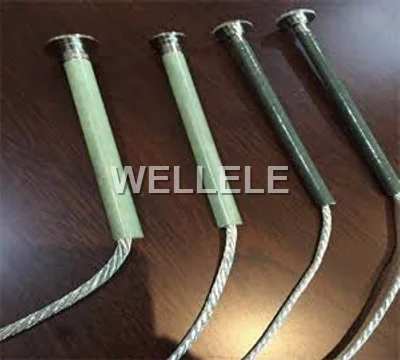
Technical specifications
| Voltage class | MV / HV per drawing |
| Body form | Cylindrical, drawn to spec |
| Materials | Ceramic epoxy glass / vulcanized fiber / arc-quenching composite |
| Interface | Machined to end-cap drawing |
| Docs | Incoming, in-process and final inspection records |
💾 Datasheets & Test Reports
Download the technical data sheet for this product (PDF).
Applications by industry
- MV fuse link barrels in distribution and utility networks
- HV current-limiting fuse bodies to customer drawing
- Expulsion-type fuse link tubes for pole-mounted cutouts
- Transformer protection MV links
- Capacitor bank MV fuse bodies
- Drop-out and striker-fuse link assemblies
Why vulcanized fiber for this application
MV/HV links demand a body that withstands the pre-arcing thermal pulse and contains the fibre/bore geometry until the element parts. Vulcanized fibre meets this at lower cost and weight than ceramic for outdoor cutouts, and machines to the contours of a drawn link body.
Confirm the breaking-capacity rating and bore design against the drawn duty; fibre-grade and venting are always application-specific. Not for continuous service above 105 °C core.
Standards: IEC 60282-1, IEC 60269-2, ANSI C37.47 (distribution cutouts).
Feature and remaining-wall review
Medium and High Voltage Fuse Link Bodies is ground or turned on ID and OD, with CNC knurling, threading, slotting and cutting to drawing. Before quotation we check feature depth, edge distance and remaining wall against the critical geometries, and capability is confirmed on your drawing rather than from a blanket tolerance.
Inspection and traceability
We state the control plan with you. Batch traceability links raw material lot to finished part.
- First-article inspection (FAI) per your plan
- In-process dimensional checks at every station
- Batch certificate of conformance (COA) supplied on request
- Lot traceability to incoming material certificate
- Dielectric strength and insulation resistance testing available on request
Related components
Ceramic-Filled Epoxy Fiberglass Tubes
Related insulation component from the WELLELE catalog.
Synthetic Arc-Quenching Fuse Tubes
Related insulation component from the WELLELE catalog.
Small-Diameter Thin-Wall Fuse Tubes
Related insulation component from the WELLELE catalog.
Common questions
Which grade of Medium and High Voltage Fuse Link Bodies to Drawing do I need?
With the service conditions for Medium and High Voltage Fuse Link Bodies in hand, that is voltage, temperature and mechanical load, we point you to the grade in the table above. An unusual duty gets an honest answer, not a guess.
What material is used for Medium and High Voltage Fuse Link Bodies to Drawing?
The material is Ceramic epoxy glass / vulcanized fiber / arc-quenching composite. Alternate grades can be quoted against your drawing.
Is material certification supplied with Medium and High Voltage Fuse Link Bodies to Drawing?
Yes. Every batch of Medium and High Voltage Fuse Link Bodies carries a material certificate of analysis, and we can add first-article inspection and further electrical testing if your specification asks for them.
Can Medium and High Voltage Fuse Link Bodies to Drawing be made to our drawing?
Dimensions are supplied to your drawing. Give us the drawing for Medium and High Voltage Fuse Link Bodies with the target quantity and we will confirm feasibility and price.
Engineering Guides & Selection Notes
Engineering notes covering the sizing and specification questions around Medium and High Voltage Fuse Link Bodies.
Get pricing for Medium and High Voltage Fuse Link Bodies to Drawing
Send the drawing for Medium and High Voltage Fuse Link Bodies and state the annual volume. We check the grade against duty and tolerance, verify the bore, outside diameter, wall and any features of Medium and High Voltage Fuse Link Bodies, and reply with manufacturability notes and pricing.