Composite Sleeve for Dropout Fuse Cutouts
Arc-quenching composite sleeve for distribution dropout (cutout) fuses, built for outdoor UV, repeated interruption and fitting coordination.
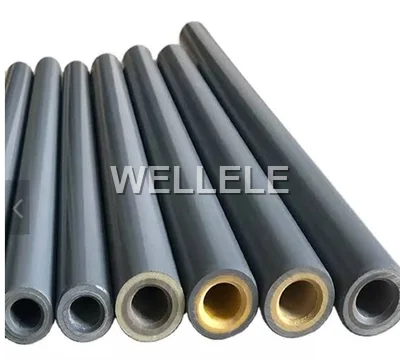
A dropout (cutout) fuse lives outdoors on a distribution pole and opens under fault, repeatedly, for years. The tube is the part that takes the arc every time it clears, so it has to quench, survive the mechanical shock of the drop, and not chalk or crack under UV and damp heat. A plain sleeve that is fine in a switchroom fails here because the duty is interruption plus weather, not just insulation.
We build the cutout sleeve as a vulcanized-fiber / fiberglass composite so it quenches the arc and carries the burst load, then we validate it as an assembly with the metal end fittings and the porcelain or polymer insulator the cutout OEM already uses. The sleeve alone passing a lab test is not enough -- it has to live with the fittings and the hinge for the project life, which is what the qualification is really about.
Technical specifications
| Application | Distribution dropout / cutout fuse sleeve |
| Material | Vulcanized fiber + fiberglass composite, arc-quenching |
| Voltage | Distribution class up to 36 kV cutout rating |
| Outdoor | UV-stable, damp-heat resistant grades |
| Fit | Matched to cutout type and metal end fittings |
| Life | Repeated-interruption and drop-shock qualified |
| Evidence | Assembly life and project certification on request |
Applications by industry
- Dropout and cutout fuse manufacturers
- Distribution cutout OEMs
- Utility hardware manufacturers
- Porcelain and polymer insulator manufacturers
- Grid and utility distributors
- Cutout replacement-tube supply programs
What kills a dropout fuse tube in the field
Three things, in order: the arc erodes the bore until it will not quench, UV and damp heat chalk and crack the surface until it tracks, and the repeated drop shock loosens the fit with the end fittings. A sleeve qualified only on dielectric strength misses all three. The composite wall handles the arc and the burst; the UV-stable grade handles the weather; and the assembly validation handles the fittings. Cutout OEMs buy the part that survives the combination, not the one with the best single number.
Fit with fittings and life validation
We supply the sleeve matched to the cutout drawing -- bore to the fuse link, ends to the metal fittings -- and we validate the assembly for repeated open/close and drop shock rather than testing a loose tube. For utility projects the relevant evidence is life and compatibility with the existing insulator and hinge, so we run those checks on request and document them for certification.
Inspection and traceability
We control the composite bond and dimensions, check the fit with the fittings, and run repeated-interruption and drop-shock validation on request for project certification.
- Composite bond and dimensional checks
- Bore fit to fuse link and end fittings
- UV and damp-heat exposure check on request
- Repeated-interruption life test on request
- Drop-shock and assembly validation on request
Related components
Fuse Body Tube
Other fuse-tube types by duty.
Vulcanized Fiber Composite Tube
The composite material behind the sleeve.
G5 / G9 Melamine Tubes
Arc-resistant laminate option.
Common questions
What makes a cutout sleeve different from a fuse tube?
The duty: it quenches on every fault, then drops and takes shock, outdoors, for years. A switchroom fuse tube is not qualified for that combination.
How does it survive outdoor UV and damp heat?
A UV-stable, damp-heat-resistant grade is used; plain indoor sleeve material chalks and tracks in sunlight and humidity.
Do you validate it with our fittings?
Yes -- we match the bore and ends to the cutout drawing and validate the assembly for repeated interruption and drop shock on request.
What voltage class do you cover?
Distribution-class cutouts up to 36 kV ratings; confirm your cutout type and fitting drawings.
Can it replace an existing cutout tube?
It can, provided the bore and fittings match. Send the cutout type so we confirm compatibility before supply.
Engineering Guides & Selection Notes
Engineering notes covering the sizing and specification questions around Composite Sleeve.
Get pricing for Composite Sleeve for Dropout Fuse (Cutout)
Send the cutout type, voltage class, fitting drawings and required life/qualification. We confirm the sleeve as a validated assembly.